
Dog Training for Leash Pulling in Portland, Oregon
Leash pulling can be difficult to correct in dogs. Their natural instinct of curiosity, coupled with high energy, while not generally malicious in nature, can make walking your dog a daily struggle. At Sit Down & Beyond, we help dogs and their owners learn techniques to prevent leash pulling through positive reinforcement and training.
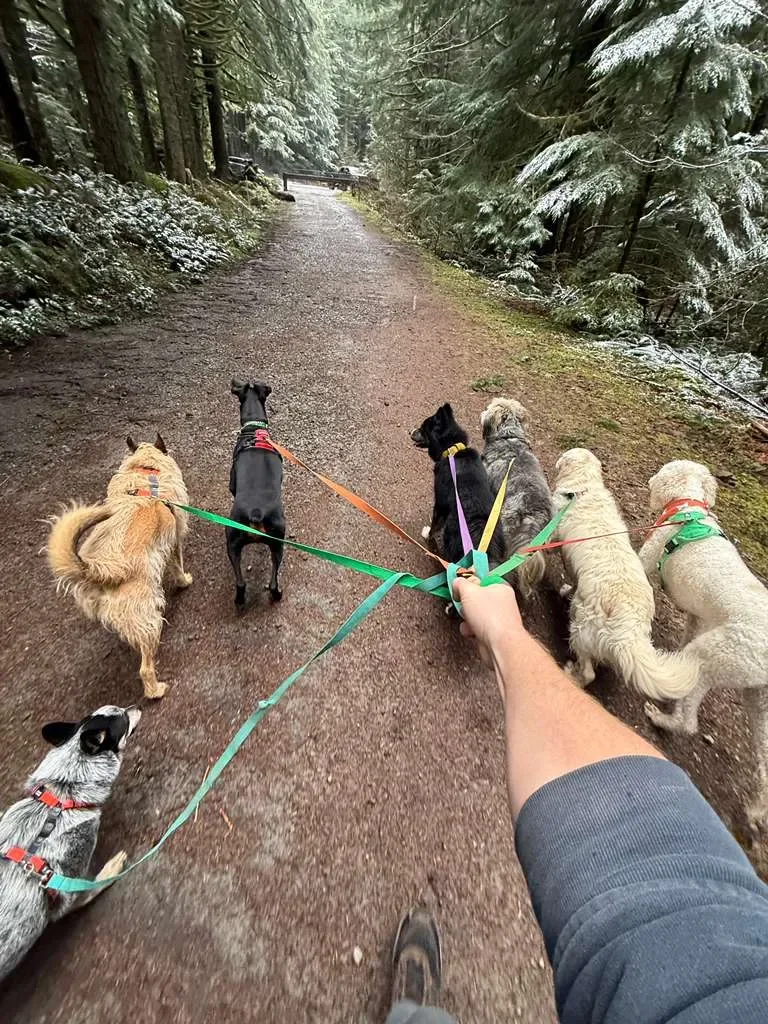
What Is Leash Pulling in Dogs?
Leash pulling isn’t just about a dog being “bad on a leash”—it’s often a sign of overexcitement, lack of training, or simply not understanding what’s expected.
Common signs of leash pulling include:
Constant tension on the leash with little to no slack
Walking ahead of you or dragging you forward
Ignoring leash pressure or your attempts to redirect
Darting toward distractions like dogs, people, or smells
Becoming overstimulated, hyper-focused, or unable to engage with you
Pulling harder as excitement increases (sometimes to the point of choking or gasping)
In many cases, dogs aren’t choosing to pull—they’ve just learned that pulling works, or they’ve never been taught an alternative.
What Does Leash Pulling
in Dogs Look Like?
Our Leash Pulling Training
for Dogs Can Help:
Reasons Sit Down & Beyond is the Optimal Choice for Dog Training for Leash Pulling in Portland?
-
Training Centered on Affirmative Support
At Sit Down & Beyond, leash walking training for dogs that are always pulling is focused on scientifically proven, positive reinforcement techniques. Instead of using punishment-based or discipline methods, our training centers on giving incentives for serene, self-confident behaviors and progressively modifying your dog’s responses to stimuli and self-rewards while walking on a leash.
Our technique to dog training for leash pulling not only positively, but it also fortifies the bond between you and your dog.
-
Educated Training Sessions & Personalized Training Instructions for Home
Your dog is a distinct individual, so why should their training be identical to any other dog? At Sit Down & Beyond, we meticulously curate training programs to meet your dog’s unique needs. You’ll discover why your dog pulls on the leash, what stimuli may be triggering pulling, and how to deal with the behaviors in real-life circumstances.
We offer distinct, one step at a time training instructions to use at home that are designed with your dog’s individual triggers in mind, making sure that your dog makes progress between each session.
-
Real-Life Dog Training for Leash Pulling in Portland
Leash-pulling behaviors may not be as prevalent in a quiet training room, so that is not where we center our work with dogs. Leash pulling shows up on walks around the neighborhood, at parks, and public places where everyday stimuli are present, and that’s where worthwhile training happens. Our training sessions include useful, real-life circumstances throughout Portland.
By helping your dog work through triggers and stimuli safely and methodically in real-life environments, your dog experiences necessary practice to correct leash-pulling behaviors.
What Does Training for Leash-Pulling Dogs Cost in Portland?
Putting money into your dog’s leash-pulling behavior isn’t just about correcting a behavior; it’s about recapturing your ability to walk your dog without stress and struggle.
1. The Foundation:
Initial Evaluation
2. Private Training
Packages
Hear from Some of Our Previous Clients
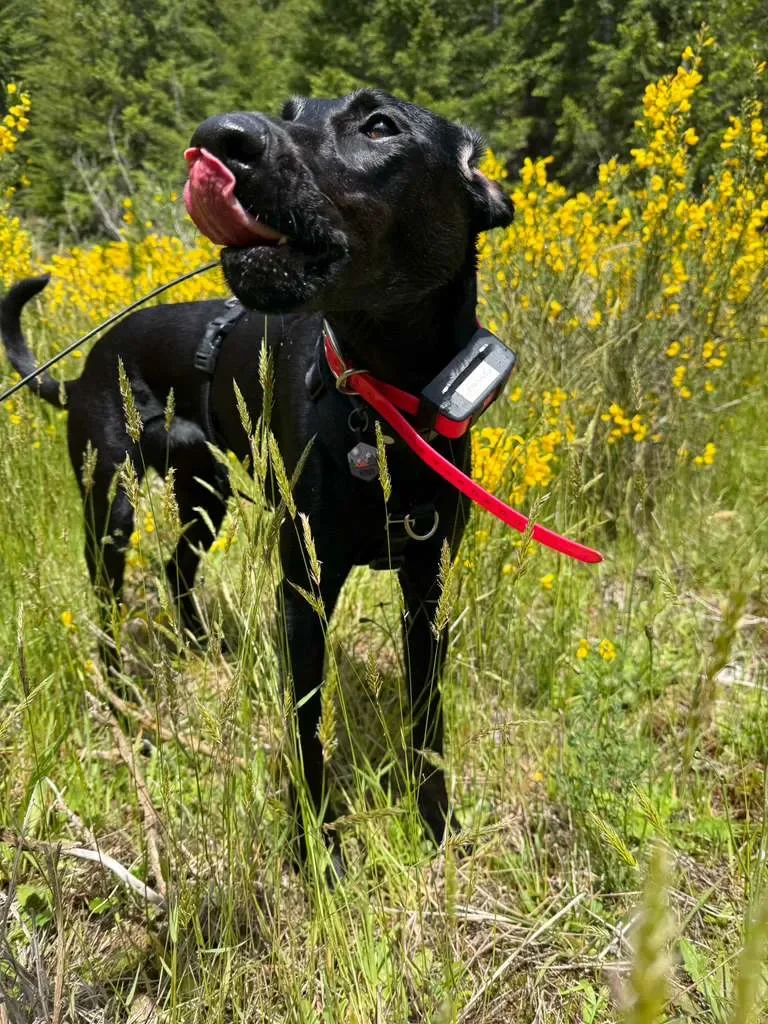
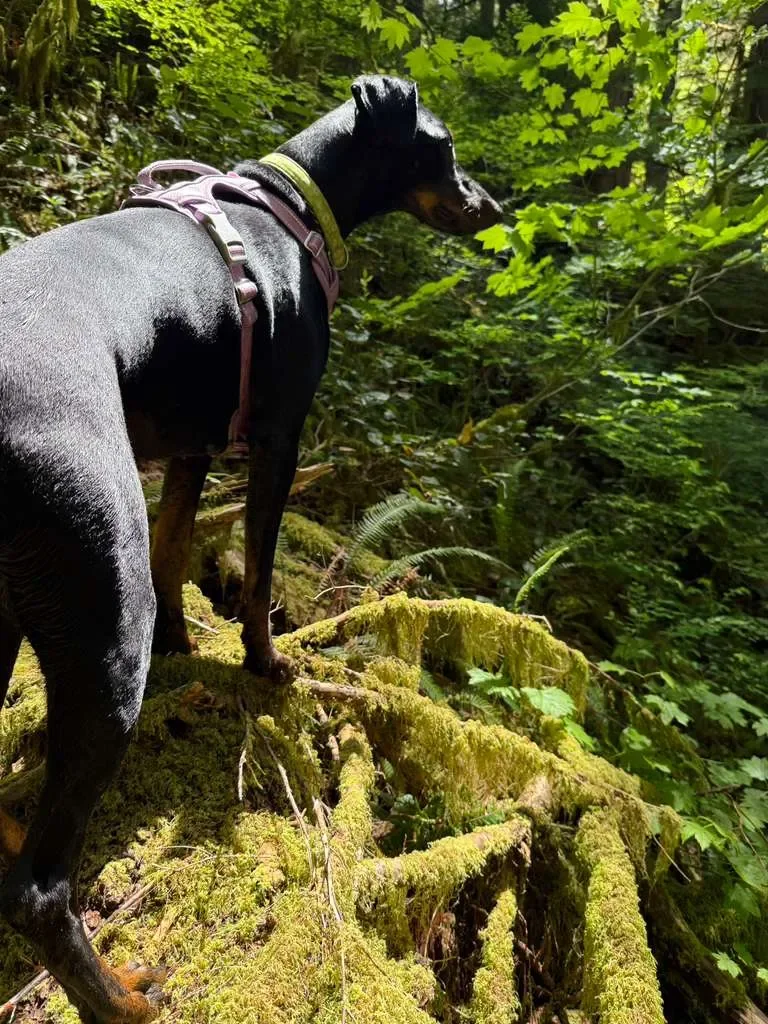
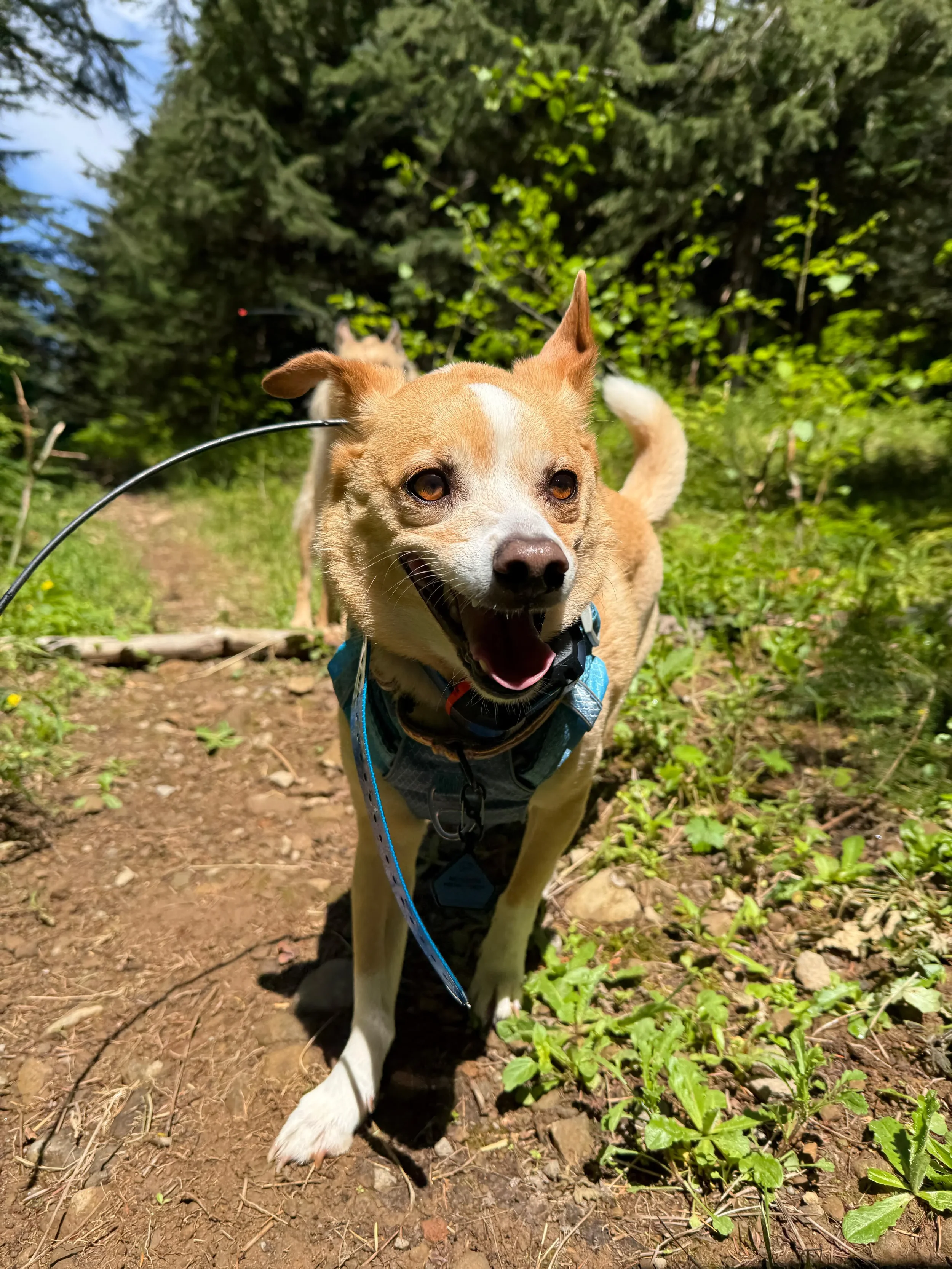
What Good Dog Training for Leash Pulling Looks Like
Our Approach To Dog Training for Leash Pulling
-
For people, leash walking may come naturally, but for dogs, it is a learned skill!
That’s why we start small and build up gradually. Instead of jumping straight into high-distraction environments, we teach your dog how to succeed step by step:
Learning to take a single step beside you before progressing further
Practicing in low-distraction environments like your home or backyard
Gradually increasing difficulty as your dog becomes more consistent
We also teach your dog how to understand leash pressure as communication—not something to fight against. When your dog feels gentle pressure on the leash, they learn to re-engage with you instead of pulling forward.
This creates clarity, reduces frustration, and builds a strong foundation for reliable leash walking.
-
Many dogs pull because they’re more focused on their environment than on their handler.
Instead of trying to control your dog through constant correction, we focus on building engagement:
Encouraging your dog to check in with you voluntarily
Rewarding attention and interaction during walks
Making you more relevant than distractions
When your dog chooses to stay connected with you, leash pulling naturally begins to fade.
-
Leash pulling is often a symptom of deeper issues, and not the problem itself.
We identify and address underlying causes such as:
Excess energy or lack of enrichment
Overstimulation or chronic over-arousal
Anxiety or frustration
Lack of proper training or exposure
By resolving these factors first, training becomes faster, easier, and more effective.
We also emphasize realistic expectations. Your dog isn’t going to master leash walking in a chaotic environment without preparation.
Instead, we focus on:
Gradual, measurable progress
Practicing skills before adding distractions
Building habits that last in real-world situations
With the right approach and consistency, most dogs can make meaningful progress in just a few weeks.
-
Good dog training for leash pulling starts with enrichment. Enrichment helps by decreasing pent-up energy, satisfying a dog’s natural instincts to sniff and explore, and minimizing overstimulation. Many times, this is a missing step for behavior training in dogs.
Our dog training for leash pulling helps you figure out areas where your dog needs more enrichment and assists you with finding what activities will provide true enrichment for your dog based on their breed, personality, unique needs, and preferences.
True enrichment activities are more than just puzzle toys and gadgets. Enrichment involves activities that align with a dog’s instincts and the tendencies of their breed. Examples of enrichment activities that we assist owners with using with their dogs include:
Scent work and sniffing games
Problem-solving activities and puzzle toys
Movement-based games to calm arousal levels
Cooperative work with the dog’s owner to help the dog focus on the owner for rewards
When dogs participate in enrichment activities regularly, they can lead more balanced and satisfied lives, and in turn, become easier to train because their energy has been reduced more healthily.
-
Managing your dog’s health, comfort, and physical stress is another important part of training for leash pulling.
When a dog is uncomfortable, whether from equipment, physical strain, or underlying pain, it becomes much harder for them to stay focused or make behavioral changes on a walk, what often looks like “pulling” is sometimes a dog trying to cope with pressure or discomfort in their body.
Our dog training for leash pulling helps you identify factors that may be contributing to stress or making leash behavior worse, such as:
Poorly fitting collars or harnesses that create pressure points
Excess strain on the neck, trachea, or spine
Physical discomfort or undiagnosed pain
Opposition reflex (a natural tendency to push against pressure)
Overexertion or fatigue during walks
We also help you evaluate whether your current equipment is supporting calm movement or unintentionally contributing to pulling behaviors.
By ensuring your dog is physically comfortable and not working against their own body on walks, leash training becomes clearer, safer, and significantly more effective.
Leash-Pulling Dog
Training FAQs
-
Dogs primarily pull on the leash because they want to go somewhere, and if their handler keeps walking forward, they learn that it works. Usually, they are curious about interesting smells, people, or places and want to get there faster.
Other reasons a dog may pull on the leash include:
Having naturally high energy
Opposition reflex when pressure is applied to the collar
A gait that is naturally faster than that of humans
Excitement
High anxiety
Lack of training on a leash
At Sit Down & Beyond, we focus on approaches that help dog owners reduce and eliminate dog pulling behaviors to make walking a much easier, more enjoyable experience for both the owner and the dog. We teach correction techniques as well as other methods to help reduce energy, reduce reactions to stimuli, and more.
-
Dogs who pull while walking on the leash can benefit from training using a harness rather than a collar. A harness is recommended to protect your dog’s health as it reduces the pressure on their neck, trachea, and spine. It also gives the handler increased control.
Several types of harnesses can be used, including:
Front-clip harness: Best for training to discourage pulling and provide better control.
Back-clip harness: For dogs that pull, but not excessively, to give more freedom of movement.
Head-halters: For very intense pullers.
The ideal way to correct your dog’s leash-pulling habits is to utilize a harness coupled with training sessions to target and correct the behavior. Our team can assess the issue, explain what is happening, and provide solutions to make your dog walking experience better.
-
There are many factors that impact how long it will take for a dog to stop pulling on the leash once training begins. The severity of the pulling and the habits that have to be corrected will affect the time it takes to fix the behaviors.
For most dogs, significant improvement can be seen between 3-4 weeks, although it can take several months to create reliable new habits. Consistency is the most important factor. Utilize the same techniques every time the dog is on the leash. All family members who walk the dog also have to be on the same page and using the same methods.
At Sit Down & Beyond, our training sessions will teach you and allow you to practice techniques for combating leash pulling. Keeping consistent training sessions and practicing what you learned each time you walk your dog will pay off. We offer 6-session or 10-session packages for dog training for leash pulling.
-
Several techniques that can improve leash pulling, including:
Stop and wait: When the leash gets tight, stop moving right away. Don’t move again until the leash has slack when the dog turns back.
Change directions: When the dog is pulling, turn and walk in the opposite direction.
Rewards: Reward the dog with high-value treats for walking right beside you.
Avoid the following behaviors because they will not teach appropriate consequences to correct the pulling:
Yelling
Yanking on the leash
Moving when the dog is pulling, even if it is only a little
Focused training sessions and consistency on every walk are key to correcting leash-pulling behavior in dogs. This is important for any level of pulling and any breed.
-
In most cases, leash pulling is not a dominance issue. Instead, it is typically a result of a lack of training, a result of high energy, or a simple desire to explore.
Whether your dog hasn’t been leash trained yet, is overstimulated by the environment, or is curious about new sights and scents, training sessions to learn techniques to correct pulling behavior would be beneficial.
Our training sessions at Sit Down & Beyond are customized to your dog’s individual needs and are designed to address these behaviors and more to make walking your dog significantly less stressful.