
Dog Training for Confidence in Portland, Oregon
Insecurity in dogs can lead to behavioral issues like aggression, severe anxiety, and destructive habits, making daily life a challenge for both you and your dog. As premier Portland dog trainers, Sit Down & Beyond helps build confidence in dogs through a proven program of controlled exposure and consistent, positive training.
What Does Lack of Confidence in Dogs Look Like?
Our Dog Confidence Training
Can Help:
Why Is Sit Down & Beyond the Best Choice for Confidence-Building Dog Training in Portland?
-
Training That Builds Confidence, Not Just Obedience
At Sit Down & Beyond, we believe there's a difference between teaching a dog to perform a behavior and helping them genuinely feel more comfortable in the world.
Our confidence-building dog training focuses on helping dogs develop coping skills, overcome challenges, and recover from stressful experiences rather than simply teaching them to remain still or follow commands when they're afraid.
We start by identifying your dog's individual triggers and breaking them into manageable steps. From there, we gradually introduce new experiences, helping your dog learn how to approach unfamiliar situations, recognize when they need space, and recover when something makes them uncomfortable.
Our goal isn't necessarily to eliminate every fear your dog has. It's to give them the skills to cope with uncertainty and navigate the world with greater confidence.
-
Personalized Training Plans & Owner Education
Every dog experiences fear differently. Some dogs are uncomfortable around unfamiliar people or other dogs, while others experience neophobia, or a fear of anything new.
That's why our confidence training for dogs begins with understanding your pup's specific triggers, responses, and individual needs.
But training your dog is only part of the process. We also teach you how to recognize when your dog is uncomfortable and what to do about it.
Throughout your training sessions, you'll learn:
How to recognize signs of fear, stress, and discomfort in your dog's body language.
How to identify situations your dog isn't ready to handle.
How to advocate for your dog during interactions with unfamiliar people or animals.
When to give your dog space or remove them from an overwhelming situation.
How to create positive experiences without pushing your dog beyond their comfort level.
How to continue building confidence through manageable challenges in everyday life.
We want you to understand not just what to do, but why you're doing it, so you can continue supporting your dog's progress long after your training sessions.
-
Real-World Confidence Training That Encourages Independence
Confidence isn't built exclusively during structured training sessions. It's developed through the experiences your dog has in everyday life.
At Sit Down & Beyond, we incorporate real-world confidence training throughout Portland, helping dogs learn to navigate unfamiliar environments, overcome challenges, and experience success.
That might mean gradually working through a fear of unfamiliar people, practicing coping skills in public spaces, or exploring hiking trails where your dog can navigate natural obstacles and solve problems independently.
As Shuli explains, there's a difference between a dog successfully holding it together when another dog walks by and a dog figuring out how to climb over a boulder on their own.
Both are accomplishments, but the second gives your dog an opportunity to succeed at something that matters to them.
Through thoughtfully managed experiences, we help dogs build confidence in their own abilities while teaching owners how to recognize and support that progress.
Because confidence isn't just about how your dog behaves. It's about how capable they feel navigating the world around them.
How Much Does Dog Confidence Training Cost in Portland?
Instilling confidence in your dog is about more than just "fixing" them; it’s about reclaiming your freedom on walks and every time a new face comes to the door.
1. The Foundation: Initial Evaluation
- Required for all new clients.
2. Private Training
Packages
Hear from Some of Our Previous Clients About Our Confidence-Building Dog Training
What GOOD Dog Training for Confidence Looks Like
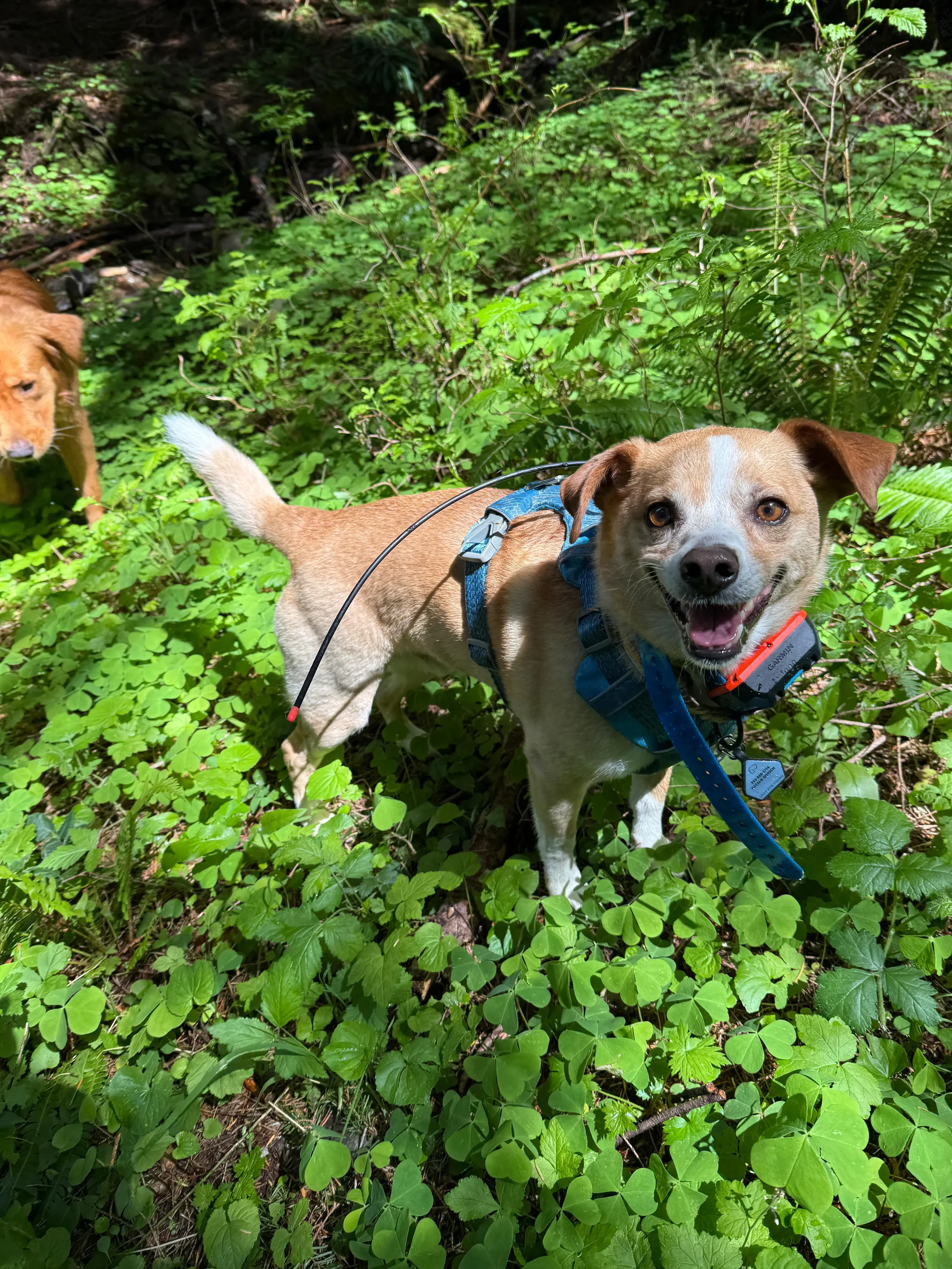
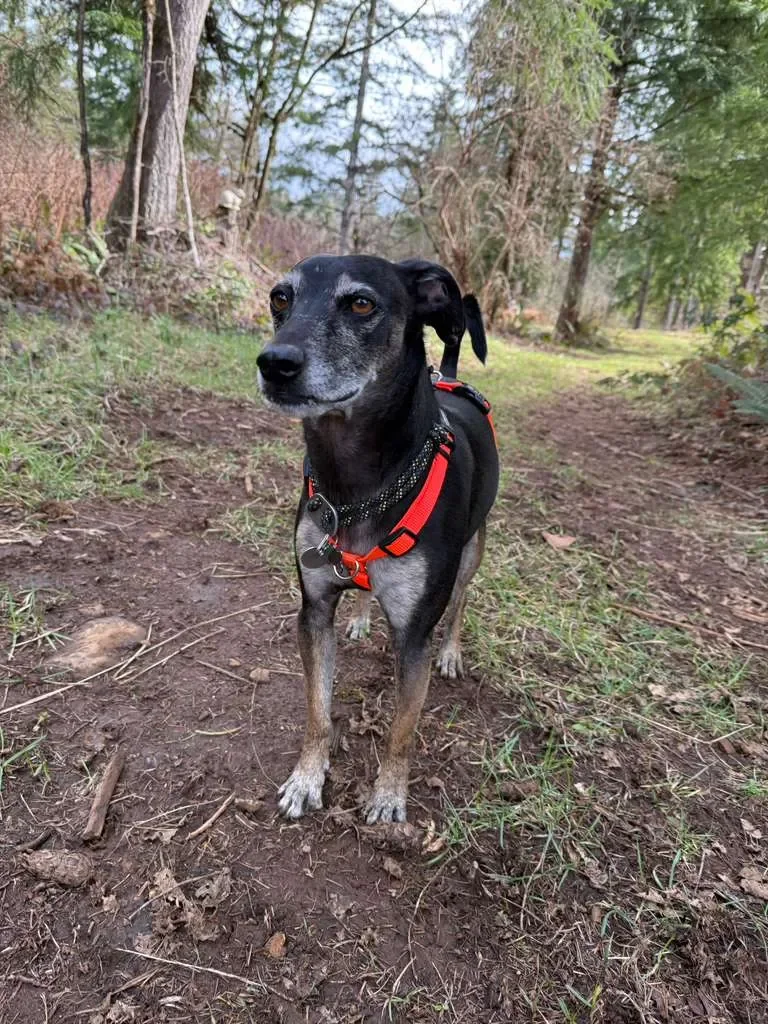
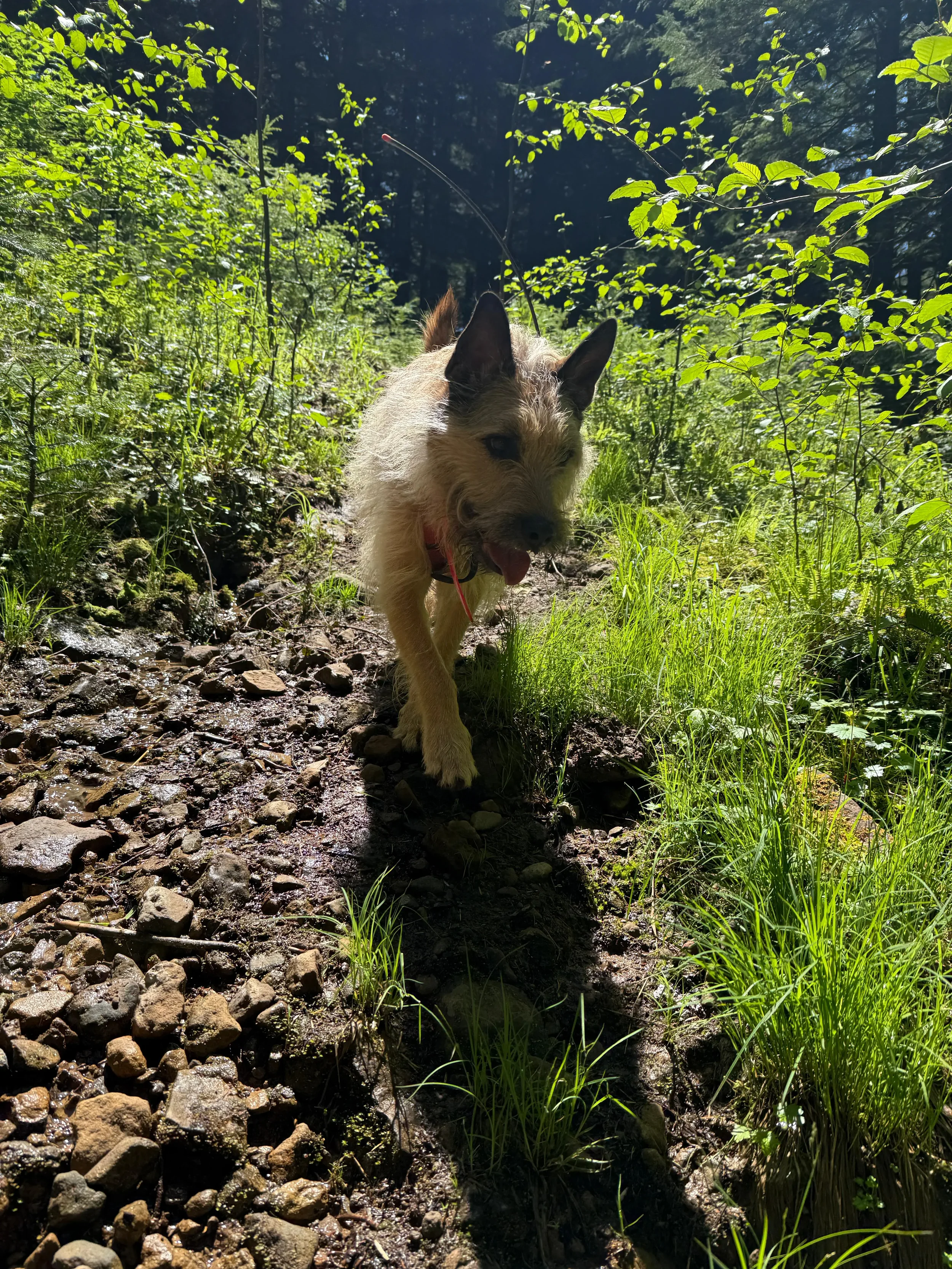
Our Approach To Confidence Training for Dogs
-
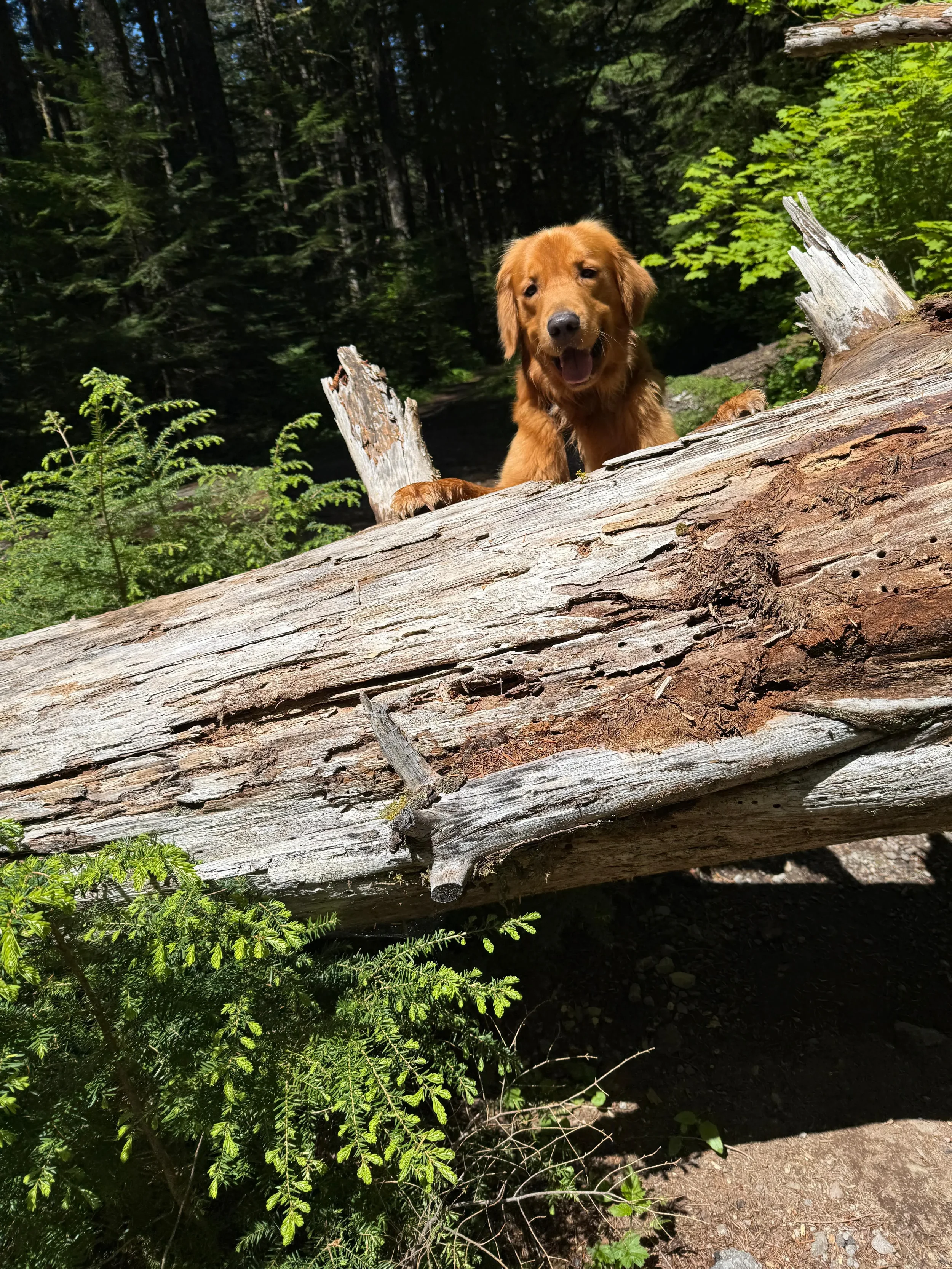
One of our favorite ways to build confidence in dogs is by taking them hiking!
Navigating uneven ground, hopping over fallen logs, crawling under branches, and balancing on wobbly surfaces might not look like traditional dog training, but these activities give dogs opportunities to problem-solve, overcome challenges, and experience success independently.
For fearful or reactive dogs, we think it's important to ask: How often does your dog get to succeed at something that matters to them?
Holding it together when another dog walks by is progress, but that's largely a human victory. When your dog figures out how to scramble over a boulder or navigate an unfamiliar trail, that's an accomplishment that belongs entirely to them.
This philosophy is a big part of our [Off-Leash Academy] and [Adventure Daycare] programs. Through trainer-led hikes, small-group adventures, and outdoor exploration, we give dogs opportunities to:
Navigate natural obstacles and unfamiliar terrain.
Build independence through problem-solving.
Develop confidence in their physical abilities.
Practice social skills in structured, real-world environments.
Experience meaningful accomplishments outside of traditional training sessions.
Our Off-Leash Academy helps dogs develop the skills needed for greater off-leash freedom, while our Adventure Daycare programs provide enriching outdoor experiences appropriate to each dog's training level and individual needs.
At Sit Down & Beyond, we believe confidence is built through accomplishments stacked up, one small victory at a time.
-
Enrichment is another important part of helping dogs develop confidence in their own abilities.
Rather than focusing exclusively on obedience or teaching dogs how to respond to commands, we want to give them opportunities to explore, make decisions, and figure things out for themselves.
Our confidence training for dogs incorporates enrichment activities that encourage independent problem-solving and allow dogs to experience success.
Depending on your dog's individual needs and interests, these activities may include:
Scent work and opportunities to follow their nose
Exploring unfamiliar outdoor environments
Navigating natural obstacles during walks and hikes
Movement-based activities that encourage problem-solving
Opportunities to investigate and interact with their environment independently
The important part isn't necessarily the activity itself. It's whether your dog is getting the opportunity to work through a challenge and experience the satisfaction of overcoming it.
We want dogs to develop confidence in their own abilities, not simply become better at waiting for instructions.
-
When working with fearful dogs, one of the first things we do is identify exactly what they're afraid of.
From there, we develop a plan to break that trigger into smaller, more manageable experiences.
As Shuli explains, if a dog is afraid of something, we might break that trigger into ten different stages. Instead of immediately exposing the dog to the full intensity of the situation, we start several steps back and gradually work toward it.
For example, a dog who is afraid of unfamiliar people might begin by simply observing someone from a distance.
As the dog becomes more comfortable, we can gradually introduce closer interactions or additional elements of the experience.
Some dogs have several triggers, and that's okay. We can work on multiple triggers throughout the training process.
The goal is to give your dog opportunities to experience something that previously frightened them without becoming overwhelmed.
We aren't asking them to simply tolerate fear. We're helping them develop the skills and experiences necessary to navigate those situations more comfortably.
-
One of the most important parts of our approach to confidence training is understanding that building confidence doesn't always mean eliminating fear.
Sometimes, we're teaching a dog how to cope.
For dogs who experience significant fear or anxiety, we pay particular attention to their recovery time.
When a dog encounters something frightening, we want them to develop the ability to experience that trigger, cope with it, and then recover.
For example, a dog might still become nervous when encountering an unfamiliar person or environment. But if they can recognize the situation, use the coping skills they've learned, and return to a relaxed state more quickly, that's meaningful progress.
As Shuli explains, the focus is often on recovery rather than expecting the dog to stop being afraid altogether.
For dogs experiencing neophobia, or fear of unfamiliar things, this can be especially important.
Our training focuses on helping dogs develop strategies for approaching unfamiliar experiences, recognizing when they need space, and recovering after something makes them uncomfortable.
In cases involving significant anxiety or neophobia, we may recommend working with a veterinary behaviorist before moving forward with training.
-
Building confidence isn't just about what your dog learns during training. It's also about helping you understand how to support them in everyday situations.
Shuli emphasizes that one of the most important responsibilities of a puppy owner is carefully managing their dog's early experiences.
A situation that seems harmless to us can feel overwhelming to a dog.
For example, a puppy hiding behind your leg when another dog approaches might not seem particularly concerning. But that behavior can indicate that the puppy is uncomfortable and needs your help.
Rather than allowing an interaction to continue, we want owners to recognize those signals and know when to intervene.
Our confidence training helps owners learn:
How to recognize signs of fear and discomfort in their dog's body language
How to read another dog's body language before allowing an interaction
When to give their dog more space
How to recognize situations their dog isn't ready to handle
How to remove their dog from an overwhelming situation
How to create more opportunities for positive experiences
We also teach owners how to approach socialization thoughtfully.
The goal isn't to expose your dog to as many people, dogs, and environments as possible. It's to create experiences that help them feel safe and develop positive associations with the world around them.
When an uncomfortable experience does happen, we want your dog to have a strong foundation of positive experiences to draw from.
-
Health and physical comfort also play an important role in creating an environment where dogs can develop confidence.
When a dog is experiencing pain, physical discomfort, or excessive stress, it can affect how they respond to unfamiliar situations and their ability to participate in training.
Before introducing new physical challenges or confidence-building activities, it's important to consider whether your dog is comfortable and physically capable of participating.
This may involve evaluating:
Poorly fitting collars, harnesses, or other equipment
Physical limitations that affect movement
Potential pain or underlying health concerns
Overexertion during physical activities
Whether an activity is appropriate for your dog's age and abilities
We want dogs to experience success through challenges they can reasonably navigate, not become overwhelmed by activities that are physically uncomfortable or beyond their abilities.
When physical discomfort or a medical concern is suspected, veterinary evaluation may be appropriate before continuing training.
Confidence Dog Training FAQs
-
Yes. Confidence-building dog training can help your dog learn that unfamiliar experiences can be safe and manageable. Instead of forcing your dog to face something frightening, our training uses gradual exposure, positive reinforcement, enrichment, and successful experiences to help them develop confidence at an appropriate pace.
-
It can! Even an old dog can learn new tricks and develop positive associations. Our confidence training for an adult or older dog takes into account their:
Individual history
Temperament
Physical comfort
Previous experiences
-
Our dog training for confidence is available in 6- and 10-session packages. The number of sessions your dog will need depends on their level of insecurity, how well they respond to training, and how often you work on skills at home.
-
While the safety of your dog and our trainers is our top priority, we’re committed to giving every dog a chance. We won’t turn away a dog with a minor bite history, but we ask you to be fully honest with us before your dog's consultation. We promise we’ll understand!
Depending on the dog, we may require muzzle training as a prerequisite or a supplement to our dog confidence training sessions to ensure everyone’s safety during the modification process.