
Training for Biting Dogs in Portland, Oregon
If you have a biting dog, you know just how difficult daily life can be for you and your dog. As premier Portland dog trainers for biting, we use controlled exposure and consistent, positive training to desensitize your dog to their biting triggers.
Is you Is Your Dog Biting?Don’t Try to Handle It Alone.
Bite behavior is complex. Work with a professional trainer to safely understand your dog’s triggers and create a plan that reduces risk.
What Does Biting
in Dogs Look Like?
Our Dog Training for Biting
Can Help:
Why Do Dogs Bite?
Not all bites happen for the same reason. Before effective training can begin, it is important to understand why your dog is biting and what they are trying to communicate through that behavior.
Biting can stem from many different causes, including fear, frustration, discomfort, guarding, instinct, or even behaviors that are rewarding for the dog. Some dogs bite because they feel trapped or overwhelmed, while others may bite because they have learned that using their mouth gets them what they want.
Common reasons dogs bite include:
Fear-based biting: A dog feels threatened, trapped, or unable to escape a situation.
Defensive biting: A dog uses biting to create distance when they feel pressured, restrained, or uncomfortable.
Resource guarding: A dog bites to protect food, toys, spaces, or people they value.
Predatory or chase-driven biting: A dog reacts to movement, such as bicycles, runners, or other animals.
Play or drive-based biting: Some dogs have strong natural drives and need appropriate outlets to satisfy those instincts safely.
Understanding the motivation behind the bite is the first step toward changing the behavior. Effective dog training for biting is not about simply stopping the bite — it is about identifying what causes the behavior and teaching your dog safer ways to respond.
The reason why your dog is biting will play a vital role in training. Not all dogs bite for the same reason, and bite management strategies vastly differ depending on the cause of the biting.
If your dog has a biting issue, it is highly recommended that you seek help from a certified dog trainer.
Understanding Bite Behavior for Safe Training & Handling
-
Nipping vs Biting: Why Context Matters More Than Words
The term “nip” may be the word you want to use if your dog has a habit of biting. However, that word tends to minimize behavior that is actually part of a larger communication sequence.
While some light mouth contact can occur in play or herding behaviors, the context determines whether the behavior is harmless or a warning signal.
A true nip is typically low-pressure and communicative, but repeated nipping or mouth contact in stressful situations can indicate escalation. The problem is not just the intensity of the behavior, but what is driving it.
Understanding the difference between play, communication, and defensive escalation is essential for preventing misinterpretation of warning signs.
-
The Dunbar Bite Scale
Not all bites look the same. A quick air snap, a warning bite, and a bite that causes serious injury represent very different levels of behavior. However, even lower-level bites provide important information about what a dog is experiencing and why they felt the need to use their mouth.
The Dunbar Bite Scale helps trainers and owners look beyond the injury itself and consider important factors, including:
How much pressure the dog used
Whether the bite made contact or broke skin
The number and severity of bites
The dog’s behavior before and after the bite
Understanding where a bite falls on the scale helps determine the appropriate next steps for training, management, and safety. A bite should never be ignored or dismissed as “just a nip,” but it also should not automatically mean a dog cannot improve. With proper assessment, training, and management, many dogs can learn safer ways to respond.
-
Why One Bite Means You Should Assume It Can Happen Again
From a safety and training perspective, a single bite should change how the dog is managed going forward. This does not mean labeling the dog as dangerous; it means acknowledging that biting is a functional behavior that occurs under specific conditions.
If a dog has bitten once, it is reasonable to assume that the right combination of stress, pressure, or environment could trigger it again.
This mindset shift is critical because it changes handler behavior:
Increased awareness of early warning signals
Better environmental management
Reduced reliance on “hoping it won’t happen again”
More proactive prevention instead of reactive correction
The goal is not fear; it is accuracy in reading risk.
-
The Problem With Denying Bite History or Downplaying Incidents
Many bite cases escalate because early incidents are minimized or re-labeled as “not serious” or “just a nip.” This denial delays proper intervention and allows behavior patterns to repeat and intensify.
When warning signs are dismissed, dogs are often placed back into the same conditions that caused the behavior in the first place. Over time, this can lead to stronger and more serious escalation because the dog learns that subtle communication does not work.
Effective prevention requires acknowledging behavior clearly and adjusting management accordingly, even when incidents seem minor.
Why Is Sit Down & Beyond the Best Choice for Dog Training for Biting in Portland?
-
Our Training Is Focused on Positive Reinforcement
Sit Down & Beyond’s dog training for biting is centered on positive reinforcement methods that are backed by science. Instead of ineffective discipline-based or punishment techniques, our dog training techniques for biting revolve around rewarding calm, confident behaviors to gradually change your dog’s emotional response to biting triggers. Our approach to dog training for biting not only improves behavior but also enhances the trust bond between you and your dog.
-
We Provide Customized At-Home Training Instructions & Educated Training Sessions
Your pup is one of a kind, and the last thing you need is copy-and-paste dog training for biting. At Sit Down & Beyond, we strategically design an individualized training plan to address your dog’s unique needs.
During our dog training for biting, you’ll discover your dog’s triggers, learn how to read body language, and gain tips for how to respond effectively in real-world situations. You’ll walk away with clear, doable, step-by-step at-home training instructions tailored to your dog’s specific triggers to ensure continued progress between sessions.
-
We Deliver Real-World Dog Training for Biting in Portland
Biting behaviors rarely show themselves in a quiet training room. They manifest at the park, on neighborhood walks, and in everyday situations, and that’s where successful training happens between owner and dog.
Sit Down & Beyond’s dog training for biting includes practical, real-world exposure in controlled settings all across Portland. Our team safely and strategically works through triggers in realistic environments to build lasting confidence and more reliable behavior in everyday life, where it truly matters.
How Much Does Training for Biting Dogs in Portland Cost?
Dog training for biting is about much more than just slapping a Band-Aid on an undesirable behavior. It’s about giving you and your dog freedom and confidence in every situation. Ultimately, the cost varies depending on your dog’s needs.
1. The Foundation:
Initial Evaluation
2. Private Training
Packages
Hear from Some of Our Previous Clients
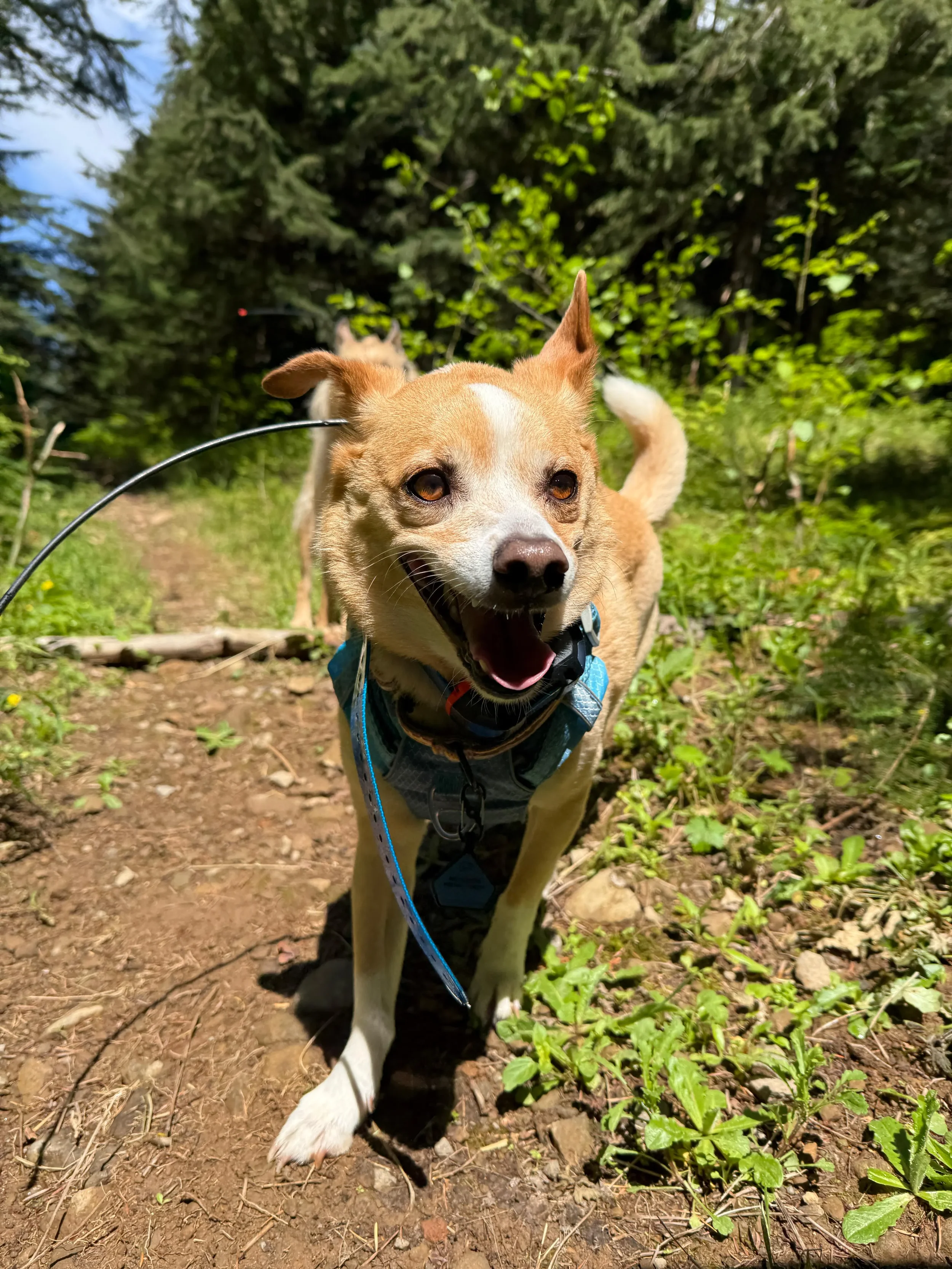
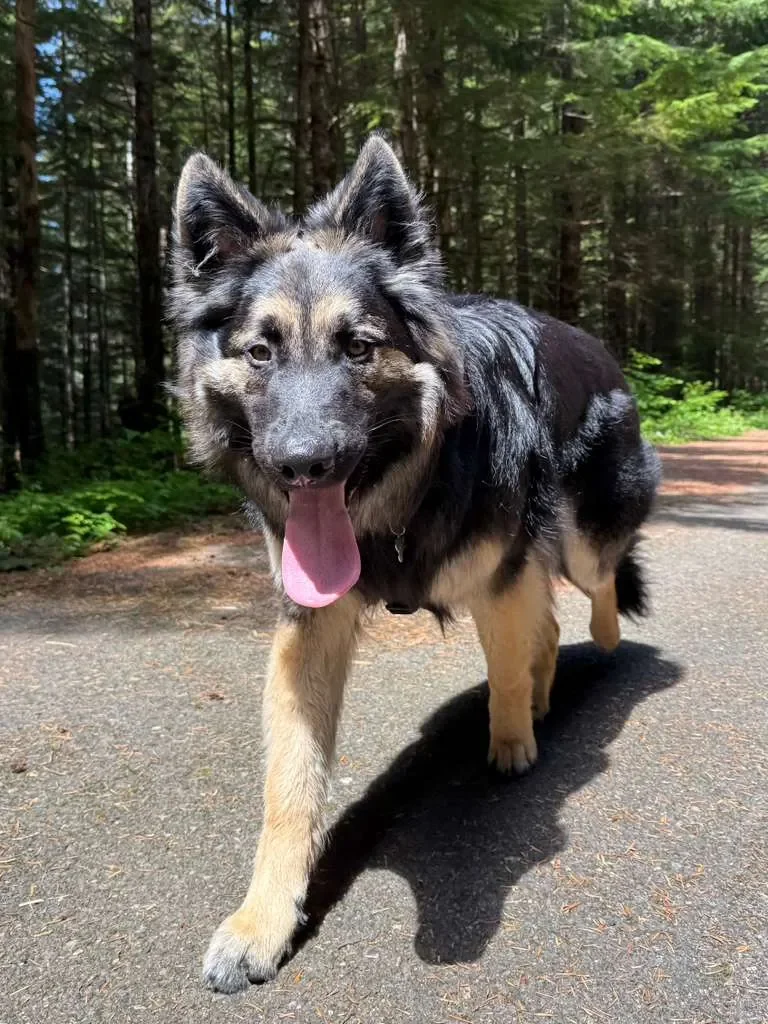
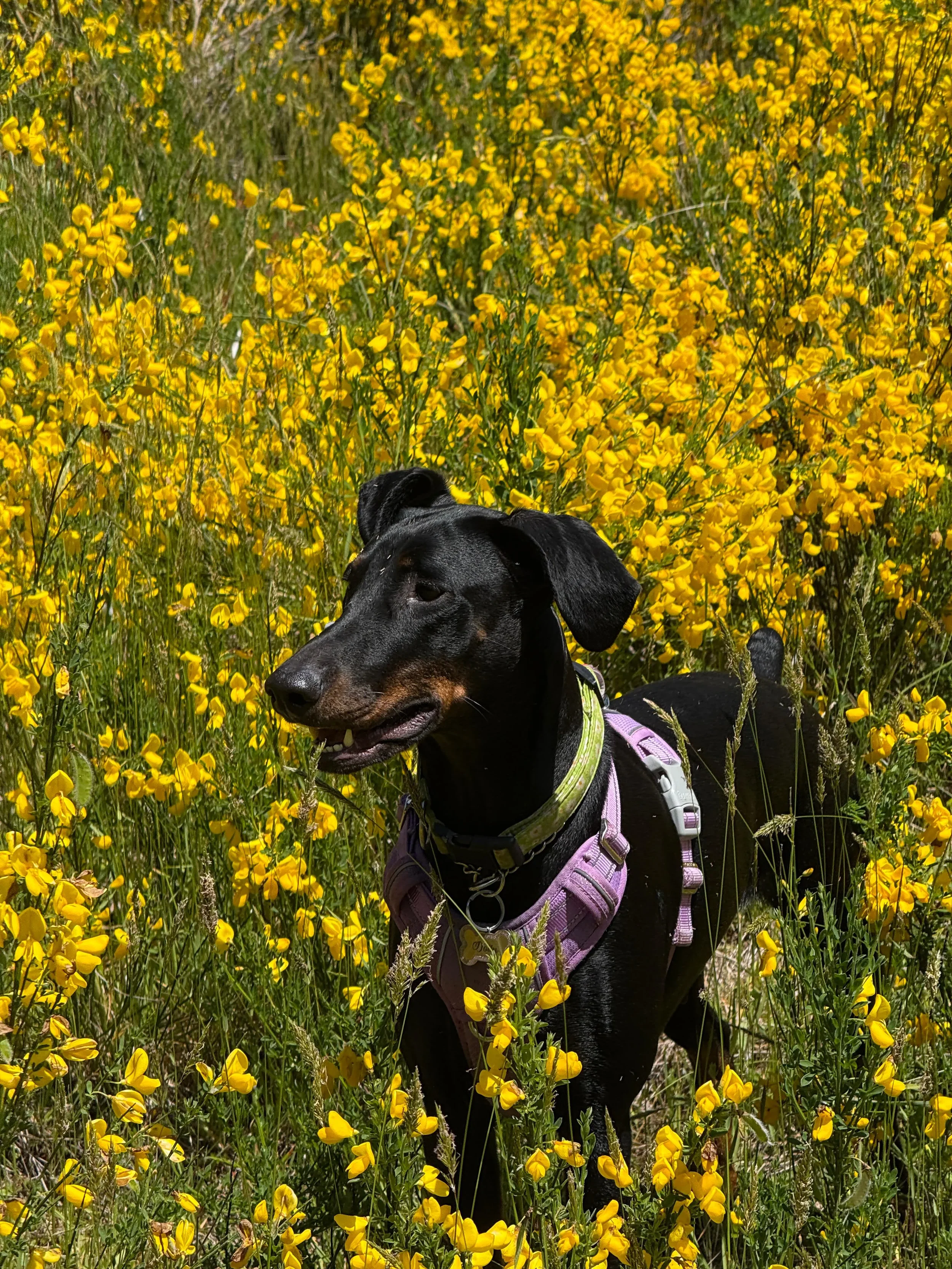
What Good Dog Training for Biting Looks Like
Our Approach to Dog Training for Bite Prevention & Safe Handling
-
Dogs rarely bite without warning. In most cases, biting is the final step in a much longer communication process. Learning how to recognize discomfort before escalation happens is one of the most important parts of bite prevention.
A dog that is uncomfortable is communicating something important. Ignoring those signals or forcing a dog through a stressful situation can increase the likelihood of escalation.
Our training focuses on helping owners recognize early warning signs, including:
Avoiding interaction or moving away
Turning their head away from touch
Lip licking or yawning
Whale eye (showing the whites of the eyes)
Crouching, freezing, or lowering their body
Tail tucking or attempting to create distance
Stiff body language or a hard stare
Growling, barking, or other warning behaviors
The goal is not to punish communication. Growling, avoidance, and other warning signals are valuable information about how your dog is feeling.
Successful bite prevention starts with listening to your dog. By understanding when your dog is uncomfortable and responding appropriately, you can prevent situations from escalating into more serious behavior.
-
Training is only one part of preventing bites. Management is equally important, especially for dogs with a bite history or dogs that have shown aggressive behaviors.
A dog that has bitten before should be managed with the understanding that the behavior can happen again under the right circumstances. This does not mean your dog is dangerous or cannot improve — it means owners need to create an environment where the dog is set up for success.
Effective management includes:
Avoiding situations that overwhelm your dog
Preventing interactions with known triggers
Using leashes, barriers, crates, or other tools when appropriate
Supervising interactions with children, guests, and other animals
Not forcing physical contact when your dog is uncomfortable
Creating distance before your dog feels the need to escalate
The goal of management is simple: do not give your dog opportunities to practice biting.
Every time a dog successfully uses biting to solve a problem, that behavior becomes more reinforced. Proper management reduces risk while training focuses on changing the underlying behavior.
-
One of the most important responsibilities of owning a dog with behavioral challenges is learning how to advocate for them.
Many bites happen because a dog’s communication is ignored. A dog that moves away, avoids touch, freezes, or shows discomfort is asking for space. When those boundaries are respected, escalation can often be prevented.
Advocating for your dog means being willing to communicate clearly with others. You need to help reinforce boundaries with others for your dog by verbally letting other people know:
“My dog needs space.”
“My dog does not like that.”
“Please do not approach my dog.”
“My dog is not friendly.”
Being honest about your dog’s needs is not failing your dog — it is protecting your dog and the people around them.
A responsible owner does not wait until a bite happens to set boundaries. They recognize their dog’s limits, communicate those limits clearly, and create safer situations where their dog can succeed.
Do not be afraid of offending others when advocating for your dog! If someone were making you uncomfortable, you’d be happy if someone advocated for you by telling them to back off.
We use structured progression, including:
Long-line training for safety and follow-through
Controlled distraction environments (parks, trails, public spaces)
Short, intentional recall reps instead of constant repetition
Gradual increase in distance, duration, and difficulty
A critical rule in recall training is that every cue must be followed through. If a recall is called, it is completed and rewarded! No exceptions. This prevents confusion and maintains reliability.
Our trainers also emphasize:
Avoiding over-cueing (preventing recall fatigue or learned irrelevance)
Preventing “poisoning” of the recall cue through negative associations
Strategic reinforcement to keep recall meaningful long-term
The goal is a recall that remains strong even when life is chaotic, exciting, or unpredictable.
-
Biting does not happen suddenly; it is typically preceded by a sequence of warning signals known as the “ladder of aggression.”
Our training focuses on teaching owners to recognize early stages, including:
Avoidance (turning away, disengaging)
Stress signals (lip licking, yawning, whale eye)
Distance-seeking behaviors (moving away, crouching, freezing)
Escalation signals (stiffening, hard stare, closed mouth)
Vocalizations (growling, barking, snarling)
Warning bites (air snaps, muzzle punches, quick contact)
The goal is not to punish these signals, but to understand them early enough to prevent escalation.Our recall training helps you identify what motivates your dog most and how to use those rewards effectively based on their temperament, breed, energy level, and personality. Successful recall training isn’t one-size-fits-all. It’s built around activities and rewards that naturally encourage your dog to focus, engage, and choose you over their environment.
Examples of recall-building activities we incorporate include:
Engagement games
Reward-driven chase and movement games
Scent-based recall exercises
Real-world distraction training
Cooperative play with the owner
When dogs get regular enrichment, they become more balanced, mentally satisfied, and easier to train because their energy has healthy outlets.
-
This is not a technique that should be used by owners of a dog with a biting problem or a history of bites. Prevention practice is a training technique implemented to discourage biting behavior by desensitizing dogs to uncomfortable interactions.
A major focus of bite prevention is teaching dogs how to safely handle discomfort before it becomes a problem behavior.
This includes structured exposure to:
Handling exercises (paws, ears, body touch, grooming prep)
Veterinary-style interactions (being restrained, examined, lifted)
Gradual desensitization to mild stressors
Controlled learning experiences with clear reinforcement
Dogs that are taught early how to tolerate handling are significantly less likely to escalate to biting under pressure.
We also emphasize owner education:
Don’t push dogs through discomfort without reading signals
Respect early avoidance behaviors
Reinforce calm cooperation rather than forcing compliance
-
Preventing bites is not just training; it is also management and awareness.
We teach owners to operate under the assumption that a dog may bite again if given the wrong conditions, especially if there is a prior bite history. This mindset changes behavior and improves safety.
Key strategies include:
Avoiding unnecessary risk exposure during early training
Using supervision and environmental control around children and guests
Managing access during high-risk situations (grooming, food, stress triggers)
Understanding breed tendencies and individual thresholds
Prioritizing prevention over correction
In real-world environments, safety comes from anticipating behavior—not reacting after it happens.
The goal is always the same: reduce risk, increase clarity, and build a dog that does not need to escalate to biting to communicate.
-
Good dog training for biting is not always about eliminating a dog’s natural instincts! It is about teaching them where and when those behaviors are appropriate.
Some dogs have a strong desire to bite, grip, chase, or engage in physical play. When those instincts are never given a safe outlet, frustration can build, and dogs may begin seeking inappropriate ways to fulfill those behaviors.
Our biting training helps owners understand their dog’s natural drives and redirect them into controlled, appropriate activities. This may include structured play with specific toys designed for biting, gripping, tugging, and engagement, while also teaching important boundaries like impulse control, releasing on cue, and responding to commands.
Appropriate outlets may include:
Structured tug games
Bite-safe toys and engagement activities
Controlled grip and release exercises
Movement-based games
Breed-specific activities that fulfill natural drives
The goal is not to encourage unwanted biting behavior; it is to give dogs a safe way to express natural behaviors while building the control and communication needed for real-world situations.
-
Health, comfort, and pain management are also key players in dog training for biting.
If you have an uncomfortable, injured, or physically stressed dog, it’s unlikely that you’ll see meaningful behavior improvement. Our dog training for biting program enables you to understand the factors that contribute to stress or increased behavioral issues, including:
Untreated pain
Overexertion
Poorly fitting equipment
Physical strain
Biting Dog Training FAQs
-
Yes! Biting training that includes positive reinforcement, desensitization to triggers, and establishing clear boundaries is highly effective. A dog with a severe biting history may occasionally require continued training and careful management throughout their life.
At Sit Down & Beyond, our dog training for biting consists of paw-sitivity. We use science-based, positive reinforcement to teach skills and modify behavior using rewards like food, play, and praise. Your dog will thrive using our humane, fear-free methods that never involve dominance, pain, or intimidation.
-
Yes. A professional dog trainer can help your dog overcome biting. From your puppy's playful mouthing to your full-grown dog’s aggressive behavior, Sit Down & Beyond’s dog training for biting can help manage your pup’s triggers and teach positive behavior.
-
No, you can teach old dogs new tricks! At Sit Down & Beyond, we believe that with consistency, positive reinforcement, and maybe a few extra treats, even senior dogs can learn to stop biting.
While age may change the pace of dog training for biting, it doesn’t limit your dog’s ability to grow, explore, and thrive. Our training programs are tailored to your older dog’s abilities and energy level, ensuring every session is rewarding, stress-free, and fun, no matter how many birthdays your dog has celebrated!
-
Sit Down & Beyond offers training in 6-session and 10-session packages. Ultimately, the number of sessions of dog training for biting your dog need depends on:
Their biting history
How well they respond to training
How often you work on training at home
-
Don’t believe the old saying, “once a biter, always a biter.” Even the friendliest pooch may be prone to bite under certain circumstances.
Sit Down & Beyond’s science-positive reinforcement dog training techniques for biting build confidence, reduce anxiety, and solve real behavior challenges with personalized, private dog training tailored to your dog’s needs. As an owner, you’ll gain the tools, guidance, and support needed to see meaningful progress in your dog’s training, no matter how big or small.