
Dog Training for Fearful Dogs in Portland, Oregon
Fearful dogs can experience stress and anxiety that make everyday life challenging for both you and your dog. As premier Portland dog trainers, we help build confidence through gradual desensitization, controlled exposure, and consistent, positive training designed to help your dog feel safer and more secure.
What Does Fear
Look Like in Dogs?
Our Fearful Dog Training
Can Help:
Why Is Sit Down & Beyond the Best Choice for Fear Aggression Dog Training in Portland?
-
Training Centered on Positive Reinforcement
At Sit Down & Beyond, fearful dog training is centered on science-backed, positive reinforcement methods. Rather than using punishment or force-based techniques, we focus on building confidence, rewarding calm behaviors, and gradually helping your dog feel safer in situations that cause fear or anxiety. Our approach not only helps reduce fear but also strengthens the trust and connection between you and your dog.
-
Educated Training Sessions & Customized At-Home Training Instructions
Your dog is unique, and their fears, triggers, and experiences are unique too, so why should their training be one-size-fits-all? At Sit Down & Beyond, we create personalized training plans designed around your dog’s individual needs. You’ll learn what’s behind your dog’s fearful behavior, how to recognize their body language and early signs of stress, and how to respond with confidence in real-world situations. We provide clear, step-by-step training guidance you can use at home, tailored to your dog’s specific fears and triggers, so you can continue building their confidence between sessions.
-
Real-World Fearful Dog Training in Portland
Fearful behavior rarely happens in a quiet training room, so that’s not where we focus our work. Fear and anxiety can show up on neighborhood walks, at parks, around unfamiliar people, or in everyday situations, and that’s where meaningful training needs to happen. Our programs include practical, real-world exposure in controlled settings throughout Portland. By safely and gradually helping your dog navigate situations that make them uncomfortable, we build confidence, reduce anxiety, and help your dog feel more secure in the environments where it truly matters.
How Much Does Training for Fear Aggressive Dogs Cost in Portland?
Investing in your dog’s confidence is about more than just “fixing” fearful behavior; it’s about helping your dog feel safe and secure while giving you the freedom and confidence to enjoy walks, outings, and everyday life together.
1. The Foundation:
Initial Evaluation
2. Private Training
Packages
Hear from Some of Our Previous Clients
What GOOD Training for Fearful Dogs Looks Like
Our Approach to Dog Training for Fearful Dogs
-
The first step in helping a fearful dog is understanding exactly what they're afraid of.
Some dogs are fearful of unfamiliar people, other dogs, or specific environments. Others experience neophobia, which is a fear of new or unfamiliar things.
Once we've identified your dog's triggers, we break them into smaller, more manageable experiences.
As Shuli explains, if a dog is afraid of something, we might break that trigger into ten different stages. Instead of immediately exposing the dog to the full experience, we start with something they can comfortably handle and gradually work toward more challenging situations.
For example, a dog who is afraid of unfamiliar people might begin by simply observing someone from a distance.
As they become more comfortable, we can gradually introduce closer interactions while giving them opportunities to retreat when necessary.
And if your dog has several different triggers? That's okay, too. We can work on multiple fears throughout the training process.
The goal isn't to force your dog to confront what frightens them. It's to help them develop the skills to navigate those experiences without becoming overwhelmed.
-
One of the most important things Shuli emphasizes about fearful dog training is that eliminating fear isn't always the goal.
Sometimes, we're teaching your dog how to cope.
A fearful dog may still become uncomfortable when encountering an unfamiliar person, animal, or environment. But learning how to respond to that situation and recover afterward is meaningful progress.
That's why we pay particular attention to your dog's recovery time.
We want your dog to develop the ability to:
Recognize and respond to something that makes them uncomfortable.
Use the coping skills they've developed through training.
Move away from a situation when they need more space.
Recover from the experience without remaining overwhelmed.
Gradually become more comfortable navigating unfamiliar situations.
As your dog develops these skills, they may begin recovering more quickly from experiences that previously caused prolonged stress.
Success doesn't always mean your dog is no longer afraid. Sometimes, it means they know how to cope with their fear and recover from it.
-
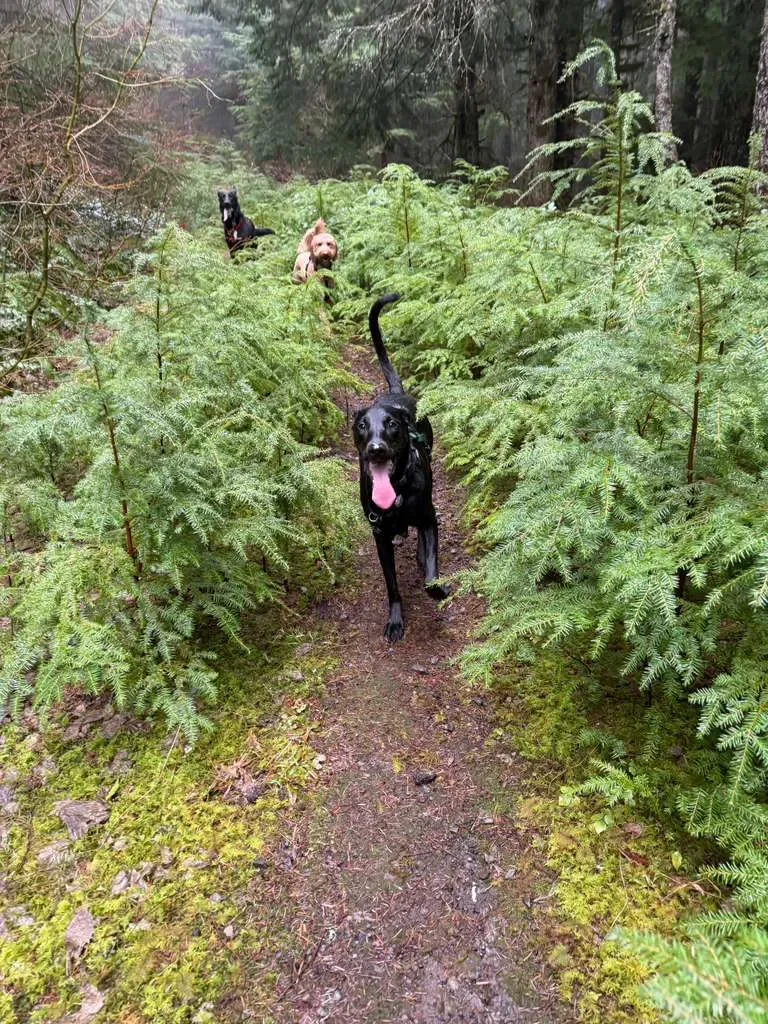
One of our favorite ways to help fearful dogs build confidence is by taking them hiking.
Navigating uneven ground, hopping over fallen logs, crawling under branches, and balancing on unfamiliar surfaces might not look like traditional dog training, but these experiences give dogs opportunities to problem-solve and accomplish something independently.
As Shuli explains, there's a difference between a dog successfully holding it together when another dog walks by and a dog figuring out how to climb over a boulder on their own.
The first is progress, but it's largely a human victory.
The second is something your dog accomplished for themselves.
That's where meaningful confidence-building happens.
Depending on your dog's individual needs and comfort level, enrichment activities may include:
Scent work: Giving your dog opportunities to explore and investigate their environment.
Problem-solving activities: Encouraging your dog to work through manageable challenges independently.
Outdoor exploration: Allowing your dog to navigate unfamiliar environments at their own pace.
Movement-based challenges: Introducing natural obstacles that encourage independent decision-making.
Positive experiences: Creating opportunities for your dog to succeed at something that matters to them.
We want fearful dogs to have experiences where they aren't simply managing their fear. They're discovering what they're capable of.
Because confidence is built through accomplishments stacked up, one small victory at a time.
-
Helping a fearful dog also means teaching their owner how to recognize when they're uncomfortable and what to do about it.
Sometimes, a dog communicates discomfort in ways that are easy to overlook.
They might move behind their owner, avoid an interaction, or become hesitant when approaching something unfamiliar.
Rather than pushing them to continue, we want owners to understand what those behaviors mean and recognize when their dog needs more space.
Throughout our fearful dog training program, we help you learn:
How to recognize signs of fear, stress, and discomfort in your dog's body language.
How to identify situations that may overwhelm your dog.
When to give your dog more space or remove them from an interaction.
How to introduce unfamiliar experiences in manageable stages.
How to recognize progress beyond simply following commands.
How to support your dog's recovery after a stressful experience.
We also help owners understand the difference between gently encouraging a dog to explore something unfamiliar and overwhelming them with an experience they aren't ready to handle.
The goal is to give you the knowledge and tools to support your dog in everyday situations, not just during training sessions.
-
Some dogs experience fear that extends beyond a specific person, animal, or situation.
Dogs experiencing neophobia or more generalized anxiety may struggle with a wide range of unfamiliar experiences, making everyday life particularly challenging.
As Shuli explains, these situations sometimes require more than training alone.
When appropriate, we may recommend working with a veterinary behaviorist who can evaluate your dog's behavior and determine whether additional medical or behavioral support is needed.
Our goal is to help your dog develop coping skills and build confidence while recognizing when additional professional support may be beneficial.
Fearful Dog Training FAQs
-
Fear can look different from dog to dog. Hiding, cowering, trembling, avoiding people or dogs, tucked tails, excessive panting, pacing, barking, growling, or trying to escape can all be signs that your dog is uncomfortable or afraid.
At Sit Down & Beyond, we use science-backed approaches that help dogs shift their emotional state from scared, anxious, or overwhelmed to calm and comfortable. Rather than simply teaching a behavior that works in a training session, our goal is to help your dog develop genuine confidence and emotional resilience.
-
Yes. With the right approach, many fearful dogs can become more comfortable and confident. At Sit Down & Beyond, training focuses on creating positive experiences, working at your dog’s pace, and gradually helping them navigate situations that once felt overwhelming.
-
Creating a predictable environment, learning to recognize your dog’s stress signals, providing appropriate enrichment, and avoiding situations that overwhelm them can all help. Your trainer can also provide personalized exercises and step-by-step guidance to continue building your dog’s confidence at home.
-
Yes! At Sit Down & Beyond, we pride ourselves on giving any dog a chance.
If your dog is reactive during grooming, we’ll take a gradual, positive approach to help them feel comfortable with nail trims, baths, brushing, and handling. The goal is to build trust and confidence so grooming becomes manageable and low-stress.
If your dog is fearful around other dogs, we may recommend our school, socialization, or daycare training programs. These structured environments give your dog carefully managed opportunities to build confidence and learn that being around other dogs doesn’t have to be scary or overwhelming.
For dogs who need more intensive support, our board and train program provides focused, structured training in a supportive environment. While you’re away, your dog receives consistent guidance, positive reinforcement, and carefully managed exposure to new experiences designed to build confidence and help them feel more comfortable navigating the world.
-
We offer training sessions in 6-session and 10-session packages, but the number of sessions your dog will require depends on the level of fear, how well they respond to training, and how often you work on training at home.
-
If your dog has a history of fear-based snapping or biting, please be honest with us before your consultation. We won’t automatically turn away a dog because of a minor bite history, and we’ll approach the conversation without judgment. Understanding your dog’s history helps us create the safest and most effective training plan possible.